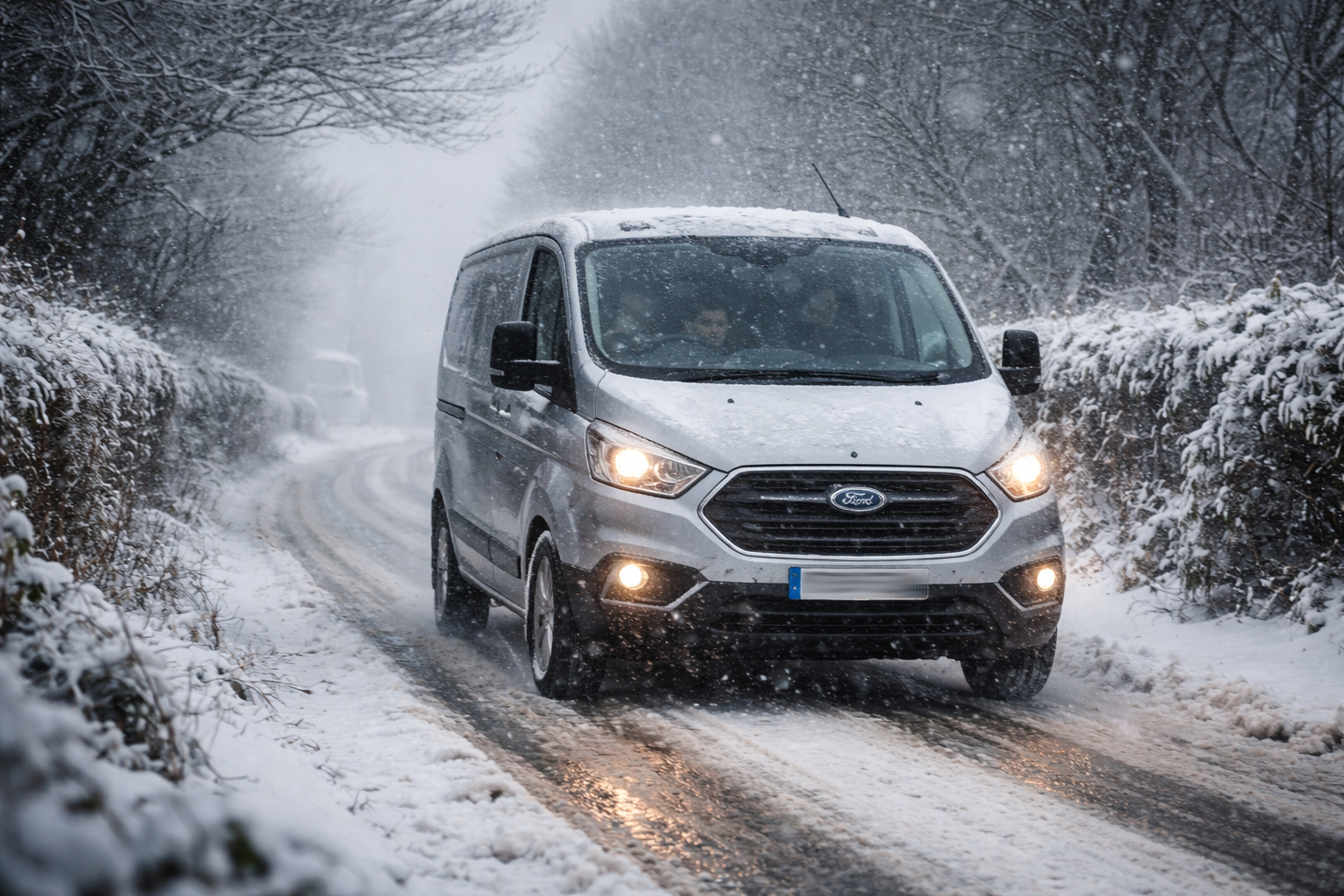
Winter Driving Tips
In light of the current ‘Yellow Warning’ for snow & ice across most of the UK, we’re sharing our top tips for winter driving; to help protect our staff, subcontractors, customers and suppliers, we’re sharing a number of practical winter driving tips to support safer journeys during adverse weather.
Before you set off:
Dress appropriately: Winter conditions can change quickly, especially during breakdowns and delays. We recommend wearing warm, weather-appropriate clothing including a winter coat, gloves and boots. Remember that emergency services and breakdown services will also take longer to reach you in the event of an accident, so ensuring you have sufficient layers will keep you comfortable for longer.
Vehicle Checks: Professional drivers are used to making vehicle checks part of their daily routine, and whilst we recommend car drivers also make regular vehicle checks, it’s especially important in winter, where extreme temperatures make vehicles more prone to issues, or expose weaknesses. You should pay particular attention to ensuring all your lights are functional and clear of snow & ice, and your screen wash levels are topped up (with winter screen wash fluid – remember that some screen wash is only effective above 0 degrees!)
Clear snow from your vehicle: Clear all snow & ice from your vehicle before setting off, including the roof, bonnet, mirrors, lights and number plates… just scraping your windows poses a danger to yourself and other road users as snow and ice left on the vehicle may slide onto your windscreen during movement, which can restrict visibility entirely. Take a few extra minutes to clear it all and keep yourself safe.
Plan ahead, checking routes and weather forecasts: Planning is key during adverse weather, checking weather forecasts, and traffic updates before starting your journey is a must, and always allow for extra time for travel. Avoiding untreated back roads and planning an alternative route in case of closures or delays is good practice too. Keeping yourself informed helps reduce unnecessary risk.
Pack an emergency kit: We always recommend carrying an emergency kit throughout the year. Recommended items include warm blankets or extra clothing, food and water, a torch, phone charger or power bank, first-aid supplies and a high-visibility vest. In winter, you should also be adding an ice scraper, de-icer and shovel to this too.
Ensure you have sufficient fuel or battery: It might sound like common sense, but it’s important to remember during these conditions, with your heaters on full, and diversions likely, you are likely to consume more fuel. Ensuring you have at least a quarter tank of fuel / battery charge, or sufficient fuel to complete a return journey to and from your destination is imperative.
On the roads:
Reduce speed and remember stopping distances can be 10 times longer than in dry conditions. Reducing your speed gives you more time to react to hazards, and other road users, helping to prevent loss of control.
Following on from the above, leave as much distance as possible between you and the vehicle ahead gives you as much time as possible to react if the vehicle ahead of you brakes suddenly or loses control.
Be smooth, avoid harsh acceleration, braking, or steering inputs. Sudden movements can quickly destabilise a vehicle, whereas smooth inputs help maintain traction and stability. Try to anticipate what’s ahead and react in plenty of time, rather than acting hastily at last minute, and risking losing control, and skidding. If you do find yourself in a skid, stay calm, avoid slamming on the brakes, and steer gently into the skid; remember your goal is to regain control & traction, not stop the car instantly.
Using the correct gears can greatly improve control in slippery conditions. Where possible, setting off in second gear can reduce wheel spin by limiting torque to the wheels. When descending hills, select a lower gear to allow engine braking to help control your speed, reducing reliance on the brakes and lowering the risk of skidding.
Visibility is often reduced in snow, fog and heavy rain. Using low beam headlights helps ensure your vehicle is visible to others without dazzling oncoming traffic. In particularly poor visibility, such as heavy snowfall or dense fog, fog lights may be appropriate, though but remember to switch them off when visibility improves to avoid blinding other drivers.
Driving in snow and ice can be challenging, even for experienced drivers. These simple steps can make a real difference in keeping everyone safe, from drivers and passengers to other road users. If conditions deteriorate or you feel unsure, choosing to stay home or postpone a journey is the safest decision you can make.